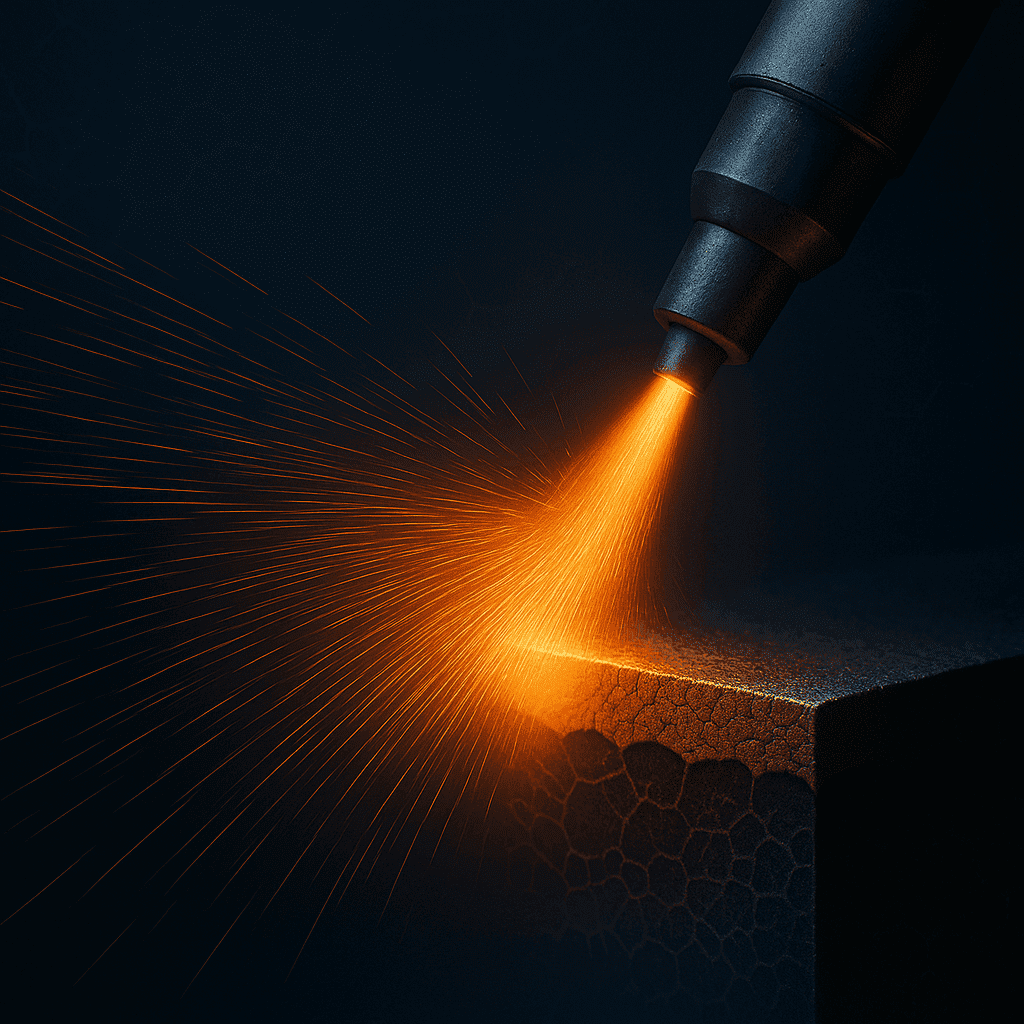


Thermal barrier coatings (TBC), are used to protect the base material against elevated temperature and other environmental impacts in the high-temperature applications such as gas turbine blades. The microstructure design of thermal barrier coatings directly affects the coating properties. In the microstructure of TBC; cracks, gaps, semi–melted phases are valid. Microstructural differences occur in the variation of the process parameters. Spray distance, powder particle size, feed angle and rate, base material type and temperature are the effective parameters of microstructural differences. In this study, the thermal barrier coating material used as yttria stabilized zirconia (YSZ); examined in three classes according to their particle size as finer, medium and coarse, respectively. Other process parameters are kept constant. Also commercial YSZ (Sulzer AMDRY 6643) is used as reference in the study for comparison. YSZ is stirred with 50 wt% Lanthanum zirconate (LZ). Mixed powders are coated on stainless steel with Atmospheric Plasma Spray (APS) method using 9MB plasma gun. The effects of different powder particle size on the porosit, and surface roughness are investigated with The Scanning Electron Microscopy (SEM) analyses.